Published: August 19, 2026
About this studyConfronting Nature Crime in the Amazon is a three-part study examining how manifestations of Nature crime (illegal deforestation, logging, mining, mercury pollution, and violence against environmental defenders) are detected, documented, and sanctioned across the eight countries of the Amazon basin, and the role civil society plays where State capacity falls short. The study finds a persistent gap between countries’ growing capacity to detect Nature crime and their ability to hold perpetrators accountable.This study was developed by Amazon Conservation, drawing on interviews and surveys of civil society organizations across the Amazon and pro bono legal analysis from the International Lawyers Project’s network. This work was funded and supported by the World Bank’s Amazon Sustainable Landscapes (ASL) Programme.
All chapters
Executive summary and recommendationsThe main findings of the three chapters and the recommendations that cut across them.
Chapter I. Towards a Nature Crime AtlasAmazon-wide data on deforestation, logging, gold mining, mercury pollution and violence against defenders.› Annex 1› Annex 2
Chapter II. Amazonian civil society in the fight against Nature crimeHow civil society organisations contribute to government action and promote accountability.
Chapter III. Enabling conditions for government engagement — Comparative assessmentLegal and institutional conditions that enable, or obstruct, civil society contribution, compared across the eight countries.
Chapter III. Enabling conditions for government engagement — Country profilesLegal and institutional conditions in each of the eight Amazonian countries.BoliviaBrazilColombiaEcuadorGuyanaPeruSurinameVenezuela
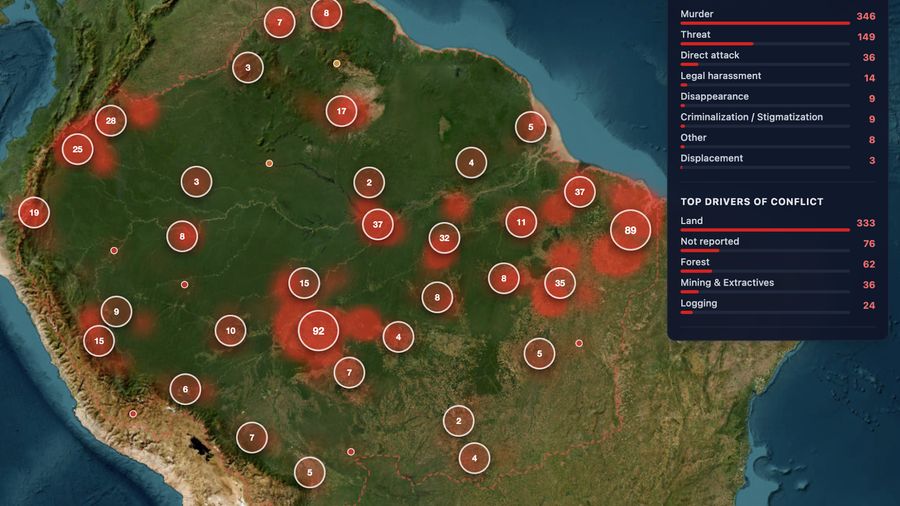
Violence against Environmental Defenders: Data PortalInteractive map of violence against environmental defenders across the Amazon.